Simple Way to Make Favorite Dwenjang Guk (Spicy, Hearty Korean Style Miso Soup)
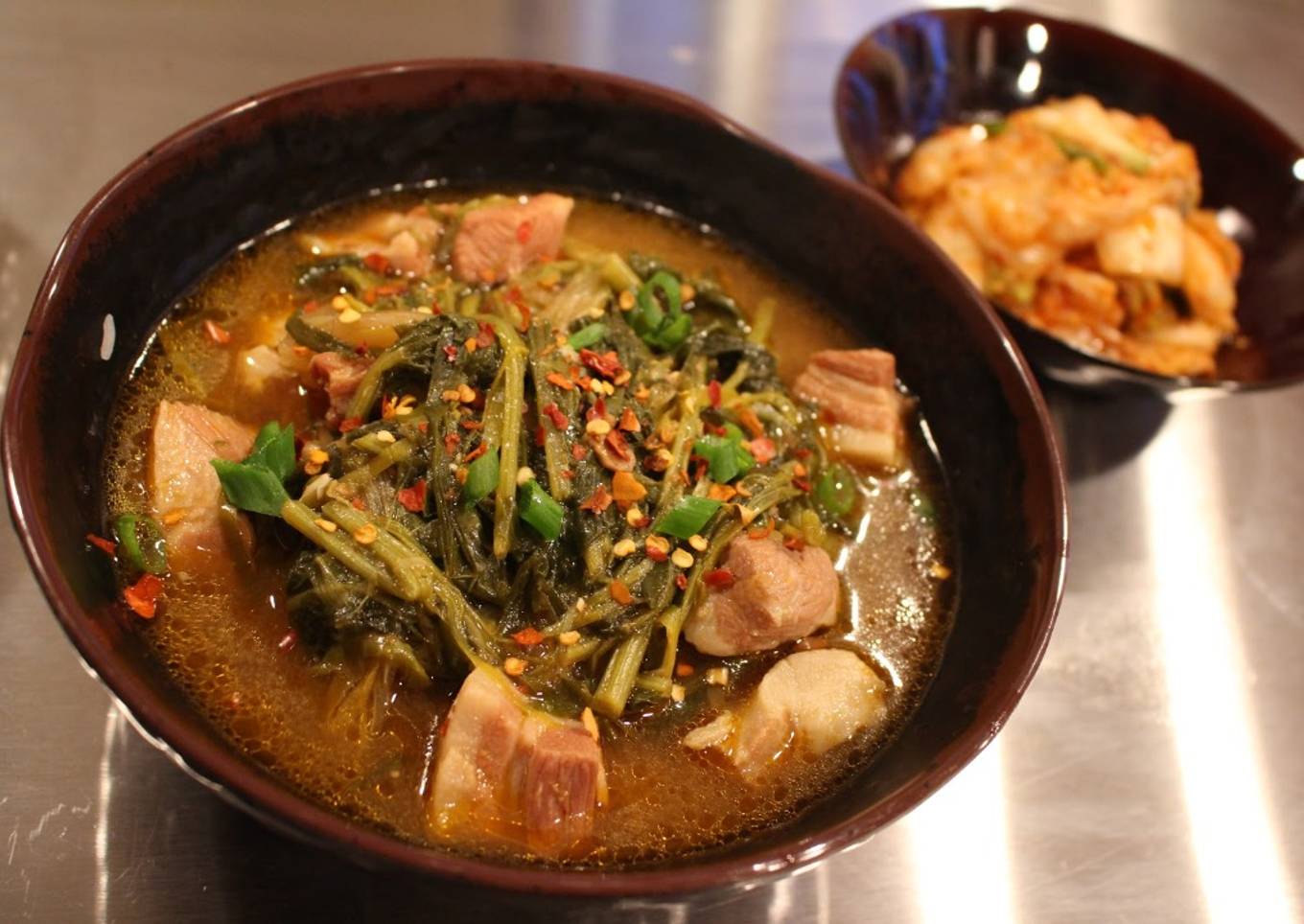
Hey everyone, hope you're having an amazing day today. Today, we're going to prepare a distinctive dish, Simple Way to Prepare Any-night-of-the-week Dwenjang Guk (Spicy, Hearty Korean Style Miso Soup). It is one of my favorites food recipes. This time, I will make it a bit tasty. This will be really delicious.
In regards to cooking, it's very important to keep in mind that every one started somewhere. I do not know of a single person who came to be with a wooden cooking spoon and all set. There is a great deal of learning which needs to be completed as a way to be prolific cook and then there is always room for advancement. Not only do you need to begin with the basics in terms of cooking however, you almost need to start if understanding how to cook a fresh cuisine such as Chinese, Chinese, Thai, or Indian food.
This means at any given time in your cooking cycle cycles there's quite probably someone somewhere that's worse or better at cooking more than you. Take heart from this as even the most effective have bad days when it comes to cooking. There are a number of people who cook for different reasons. Some cook in order to eat and survive while others cook simply because they actually like the process of cooking. Some cook during times of emotional upheaval yet others cookout of utter boredom. Whatever your reason behind cooking or understanding how to cook you need to always begin with the basics.
The first thing that you need to master is what the different terminology you'll discover in recipes actually means. There are many fresh and at times foreign sounding terms that you will see in common recipes. These terms can mean that the gap in recipe success or failure. You should be able to discover a good section in virtually any inclusive cook book which explains the different definitions for unfamiliar terminology. If you aren't entirely sure what's meant with"folding into the eggs" it is in your interests to check it up.
Many things affect the quality of taste from Dwenjang Guk (Spicy, Hearty Korean Style Miso Soup), starting from the type of ingredients, then the selection of fresh ingredients, the ability to cut dishes to how to make and serve them. Don't worry if you want to prepare Dwenjang Guk (Spicy, Hearty Korean Style Miso Soup) delicious at home, because if you already know the trick then this dish can be used as an extraordinary special treat.
As for the number of servings that can be served to make Dwenjang Guk (Spicy, Hearty Korean Style Miso Soup) is 4 to 6 servings. So make sure this portion is enough to serve for yourself and your beloved family.
Just in addition, the time it takes to cook Dwenjang Guk (Spicy, Hearty Korean Style Miso Soup) estimated approx 75 mins, mostly inactive.
To get started with this recipe, we must first prepare a few components. You can cook Dwenjang Guk (Spicy, Hearty Korean Style Miso Soup) using 14 ingredients and 7 steps. Here is how you can achieve that.
There are some elaborate Korean soups and stews that take quite a bit more work to make, but Dwenjang Guk (DWENjahng GOOHK) - dwenjang meaning Korean style miso and guk meaning soup - is a super simple and basic recipe to which some kind of greens (usually spinach and or some kind of cruciferous greens) are usually added, and sometimes tofu and/or meat as well. On the day I took these pictures, I added some extruded greens - Napa Cabbage and turnip - as well as very finely julienned leek tops (this is a great way to use them up other than stock because the very thin pieces get slow cooked to tenderness). Extruding excess liquid from greens with salt and then squeezing it out is a common preservation technique in Korean cuisine borne of necessity due to cold seasons. But the resulting intensified flavor and texture has become an acquired taste in the cuisine such that we do it even when we don't have to. This works best with leafy green veg like Napa cabbage (specially the outer leaves), bok choy, kale, collards, turnip and radish greens (and probably several more that I can't think of at the moment). If you do use them this way, remember that you'll need less of the salt element in seasoning your soup. The recipe I'm going to share with you is super basic and easily adaptable. Notes on extruding liquids from greens on last step.
Ingredients and spices that need to be Prepare to make Dwenjang Guk (Spicy, Hearty Korean Style Miso Soup):
- 5 cups unsalted stock (chicken, pork, beef, turkey and veg all work fine)
- 5 cups water
- 1/2 an onion, cut into thirds
- 4 garlic cloves, peeled and crushed
- 1/4 cup dwenjang (or miso if you don't have dwenjang, but dwenjang is usually much more pungent)
- 2 Tablespoons to 1/4 cup gochujang (Korean chili paste), depending on how hot you like things
- 2 teaspoons sugar (to round out the flavors and the salt from the pastes)
- salt and/or fish sauce if needed to adjust the seasoning
- 8 cups leafy green veg, fresh or extruded (it'll look like a lot, but it will reduce quite a bit after cooking)
- 1-2 fresh jalapeños or serranos if you like a little extra heat and chili flavor (optional)
- Optional if you'd like protein (you can do one or the other, or half of each):
- 1 pound pork shoulder or beef stew meat cut into 1-inch cubes (optional, but it helps to have a little protein if you're going to make a meal of it)
- or
- 1 package medium or firm tofu (usually 12 to 14 ounces), drained and cut into 1-inch cubes
Instructions to make to make Dwenjang Guk (Spicy, Hearty Korean Style Miso Soup)
- Put the stock, water, onion, garlic, dwenjang, gochujang, sugar, meat and any extruded veg into a large pot (fresh veg goes in later). Bring to a boil, covered, over medium high heat (should take 15 minutes or so).

- Once it's come to a boil, turn the heat down to medium low and simmer, covered, for another 20 minutes before adding any fresh veg and tofu.
- Simmer another 10 minutes or so, then adjust the seasoning for salt. If you've added fresh veg and/or tofu, you will almost certainly need to adjust for the water they will release into the soup.
- Simmer another 15 minutes with the lid askew, adjust seasoning one last time if needed, and that's it!

- If you want to have it with rice, you'll want to put the rice on to cook when you leave the soup to simmer the first time.

- It's always yummier with kimchi. Here's my kimchi recipe (which of course you would have to have made days to weeks in advance): https://cookpad.com/us/recipes/1567994-kimchi-easier-than-you-think

- EXTRUDING LIQUID FROM GREENS: Just wash the greens, sprinkle them with salt, and let them sit for a couple of hours, tossing them 2 or 3 times during the process, letting the salt draw the moisture from them. After they've released the excess liquid, just give them a good swish in a big bowl full of clean water, and squeeeeeeeze all that liquid out. You can then freeze the greens for future use, or refrigerate them for 2 to 3 weeks before using.


Additionally you will find as your own experience and confidence grows that you will find yourself more and more frequently improvising while you move and adjusting meals to meet your personal preferences. If you prefer more or less of ingredients or would like to create a recipe a little more or less spicy in flavor you can make simple adjustments on the way so as to attain this objective. In other words you will start punctually to create meals of your individual. And that is something which you wont fundamentally learn when it comes to basic cooking skills for novices but you would never know if you didn't master those basic cooking skills.
So that's going to wrap this up with this exceptional food Recipe of Perfect Dwenjang Guk (Spicy, Hearty Korean Style Miso Soup). Thank you very much for your time. I am sure you can make this at home. There's gonna be interesting food at home recipes coming up. Don't forget to save this page on your browser, and share it to your family, friends and colleague. Thank you for reading. Go on get cooking!